In my article “How to Spot Weld Batteries? Tips & Tricks,” I provided detailed information about spot welding batteries. I’m not an expert; I’m researching and applying the techniques, and I’m almost at the end.
I have a lot of experience from the past, but it’s not enough. I’ve pretty much figured out the system, and it’s going well in applications.
I have an old model battery spot welding machine, but it has fixed electrode tips and isn’t flexible. Wired spot welding is more practical, especially for making battery packs like drill batteries.
I’ve learned from experience that the length and thickness of the wire are very important in pen-type electrodes. When spot welding 18650 batteries, the wire shouldn’t overheat. Power losses on the wire can mislead you; you might think the device is insufficient, but the inadequacy of the wire and the pen system is one of the significant factors causing spot welding problems. I made my own spot welding pens, and they gave very good results.
Materials Needed for Making a Spot Welding Machine Pen
Contents
2 hobby drill chucks that can hold 3mm bits*
2 x xxmm 30cm 6mm cable**
2 x 5cm 3mm copper wire
2 x 10cm xxmm copper pipe ***
I already had hobby drill chucks, and I got the used copper pipe from a plumber friend. The cable I used was from a 200 Amp welding machine; it was quite old and worn out, so I cut two 30cm pieces and started.
Spot Welding Cable Details
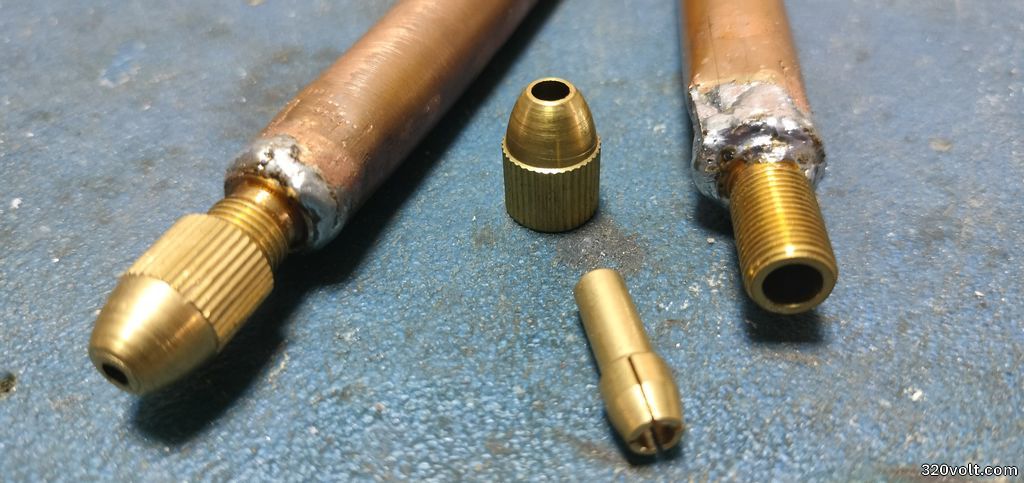
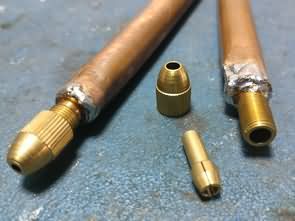
* Drill chucks: The chucks I used have interchangeable bits between 0.5mm and 3mm. I used 3mm bits.
If you are going to buy a new chuck, it is better to use integrated 3mm chucks with non-interchangeable bits, as shown in the picture below.
Remember, when making a spot welding cable, the fewer splices, the better the efficiency.

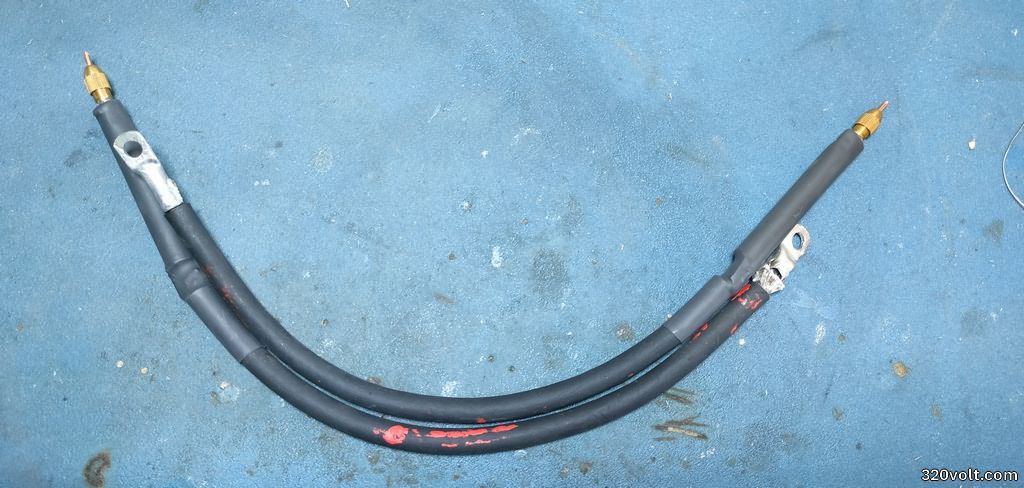
**Cable: I used welding machine cable because, despite being very thick due to its special winding, it’s flexible and easily bent. Normal electrical wiring has thicker, straighter, untwisted cores, making it stiffer. The welding machine cable I used has an inner diameter of approximately 6mm and is sold in 35mm² sizes on the market. Do not use cables smaller than 25mm².
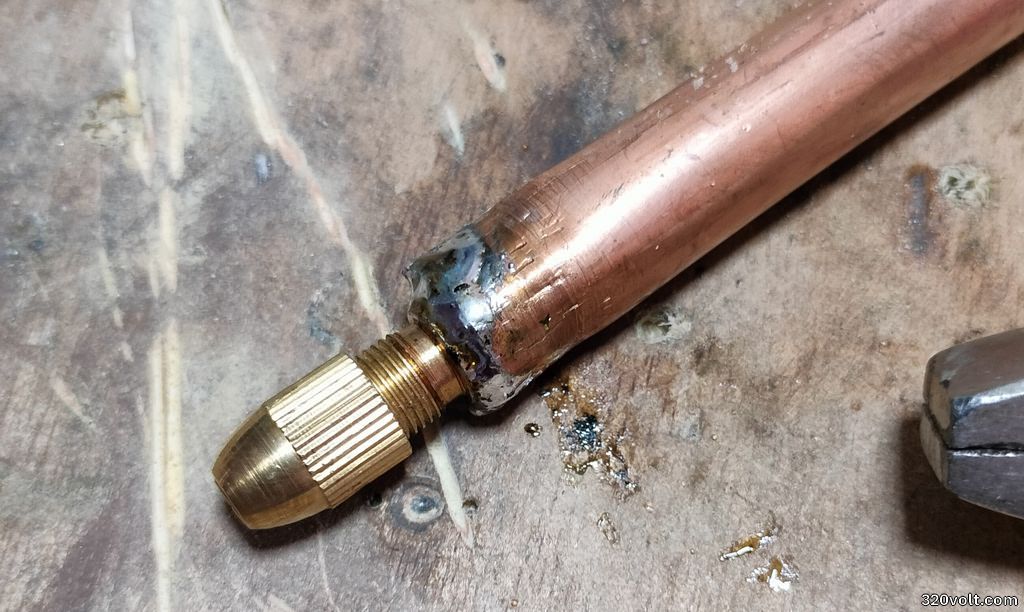
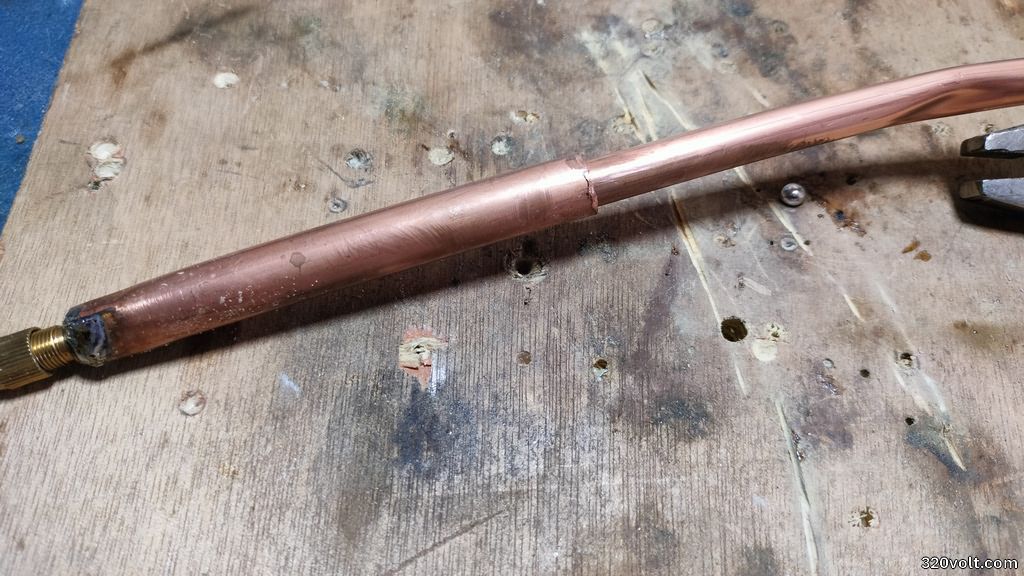
***Copper pipe: The diameter of the pipe I used is 12.60mm. Since the chuck diameter is smaller, I compressed it a bit to fit. It’s better to get a pipe that fits the chuck diameter.
Making a 18650 Battery Spot Welding Cable
First, I cut two 10 cm pieces of copper pipe and soldered the chucks to the ends. It wasn’t really necessary, but for reinforcement, I placed a slightly smaller diameter pipe inside and soldered that as well.
Soldering the welding machine cable was quite a lot of work. Because it was oxidized and blackened, I first cleaned the section I was going to solder with zinc solution, then soldered it with a 100W soldering iron + heat gun.
After that, I soldered the copper tube as well. The final step was joining the two. Because the cable was very thick, it took a long time.
After the soldering was finished, I wiped the ends with isopropyl alcohol to clean them thoroughly. I cut about 5cm from a 4mm single-core electrical cable, slightly tapered the end with a Dremel, and started testing. I made a great spot weld on the first try; there were no problems.
The cable wire size issue works differently at electricians’ shops. I asked for a single-core cable with a 3mm diameter inside, and they said they only had 4mm. I thought I’d just thin it down and use it, but it turns out the 4mm size includes plastic insulation.
However, when I stripped off the plastic and measured the wire with calipers, it showed 2.6mm. They use square meters for measurements; it’s not something an electronics technician would do, so pay attention to that. Battery Spot Welding Machine Cable Connection
I used metal bolts to connect the cables to the transformer with my battery spot welding machine, but I found that it produced a weak spot weld during testing. Previously, it performed well with the same settings.
In the initial tests, I connected the cables directly to the transformer outputs using metal bolts for enclosure assembly. I should have used brass bolts or worm gears because they provide better conductivity, but I couldn’t find them.
I thought there wouldn’t be a big difference, but I was wrong. I soldered the spot weld cable directly to the transformer output using copper pipe soldering. It worked flawlessly again. Perhaps this is specific to AC spot welding machines, but use a material with good conductivity for connection joints, and as I mentioned before, minimize the number of joints and, if possible, solder directly without using screws.